Duck Out in Cricket: Meaning, Types, Rules and Famous Examples
A batter walks to the crease with hopes of scoring big, but sometimes their innings ends before they score even a single run. In cricket, this is known as getting out for a duck. From promising newcomers to legendary international stars, no batter is completely safe from this disappointing moment. But why is it called a duck, and why does it matter so much in cricket?
What is the difference between a golden duck and a diamond duck? What do the terms pair and king pair mean? If you have ever wondered about these cricket expressions while watching a match or reading a scorecard, you are in the right place. This guide explains the meaning of a duck out in cricket, its different types, the rules behind it, and how it affects a batter’s statistics.
What Is a Duck Out in Cricket?
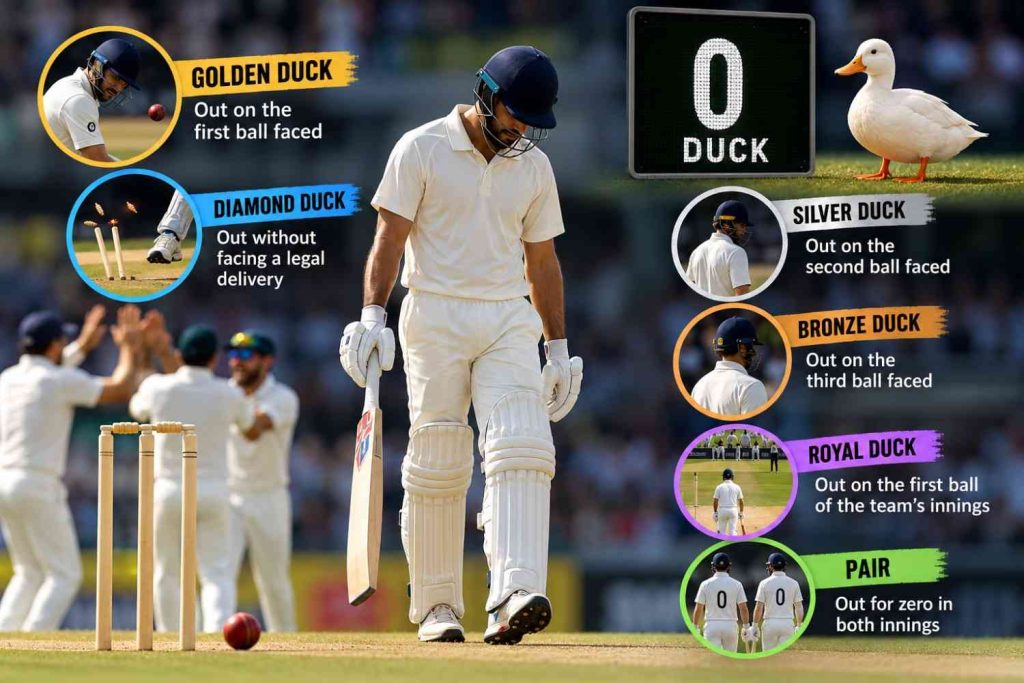
A duck out in cricket means a batter is dismissed without scoring a single run in their innings. The scorecard records the batter’s score as zero, usually written as 0.
For example, imagine a batter faces four balls and is caught by a fielder without scoring. The batter has been dismissed for a duck. The same applies if the batter is bowled, given out leg before wicket or dismissed through another valid method while their individual score remains zero.
However, a batter who finishes an innings on zero without being dismissed is recorded as not out. This is not a duck because the batter has not lost their wicket.
The term is commonly associated with a duck’s egg, whose oval shape resembles the number zero. BBC Bitesize explains this origin in its guide to cricket terminology. You can read more in the BBC Bitesize cricket jargon guide.
What Are the Different Types of Ducks in Cricket?
Cricket fans use several informal terms to describe a batter’s dismissal for zero. Some refer to the number of balls faced, while others describe when the dismissal happens.
| Type of duck | Meaning |
| Regular duck | Dismissed for zero after facing more than one ball |
| Golden duck | Dismissed for zero on the first ball faced |
| Silver duck | Dismissed for zero on the second ball faced |
| Bronze duck | Dismissed for zero on the third ball faced |
| Diamond duck | Generally dismissed for zero without facing a legal delivery |
| Royal or platinum duck | Informal terms often used for a dismissal on the first ball of the team’s innings; some sources reserve platinum duck for the first ball of the match |
| Laughing duck | Informal term for a dismissal for zero on the final ball of an innings |
| Pair | Dismissed for zero in both innings of the same match |
| King pair | Dismissed for zero on the first ball faced in both innings |
These names are cricket slang, not separate dismissal categories in the official Laws of Cricket. Their meanings can vary between publications and regions. The SportsAdda guide to cricket ducks explains several of these common terms.
What Is a Golden Duck in Cricket?
A golden duck occurs when a batter is dismissed for zero on the first ball they face. The batter loses their wicket before scoring a run.
For example, a batter comes in at number four and edges the first delivery they face to the wicketkeeper. If the catch is completed legally, the batter is out for a golden duck.
A golden duck can happen in Test cricket, One Day Internationals, T20 Internationals and domestic tournaments such as the Indian Premier League. It can be particularly costly in limited-overs cricket because teams have fewer deliveries to recover from an early wicket.
What Is a Diamond Duck in Cricket?
A diamond duck generally means a batter is dismissed for zero without facing a legal delivery. A common example is a run out at the non-striker’s end before the batter faces a ball.
Imagine a batter comes to the crease and attempts a run before facing a delivery. If the fielding side completes a valid run out while the batter has scored zero, the dismissal is commonly described as a diamond duck.
A batter can also be dismissed without facing a legal delivery in certain other circumstances, including a run out associated with a wide. The exact terminology varies between sources, so it is useful to check how the publication defines a diamond duck.
What Are Silver and Bronze Ducks?
A silver duck describes a dismissal for zero on the second ball faced. A bronze duck describes a dismissal for zero on the third ball faced.
For example, if a batter survives the first delivery but is caught off the second without scoring, it is commonly called a silver duck. If the batter is dismissed on the third ball faced while still on zero, it may be called a bronze duck.
These terms are less widely used than duck and golden duck. Official scorecards generally record the batter’s runs, balls faced and method of dismissal rather than these informal labels.
What Are Royal and Laughing Ducks?
A royal duck commonly refers to a batter being dismissed for zero on the first ball of their team’s innings. This usually involves an opening batter who faces the first delivery.
A platinum duck is another informal term, but its meaning varies between sources. Some use it for a dismissal on the first ball of the match, while others use it for the first ball of a team’s innings. Because these definitions overlap, it is best to explain the exact situation when using either term.
A laughing duck is an informal term for a batter who is dismissed for zero on the final ball of their team’s innings. It is not an official scoring category, and its use is less consistent than the term golden duck.
Because these labels are informal, writers should explain the intended meaning instead of assuming every reader uses the same definition.
How Does a Batter Get Out for a Duck?
A duck is defined by the batter’s score and dismissal, not by one particular method of getting out. Several valid dismissals can result in a duck.
Common examples include:
- Bowled: The ball hits the stumps and dislodges the bails.
- Caught: A fielder completes a legal catch after the ball comes off the bat or glove in circumstances covered by the Laws.
- Leg before wicket: The umpire gives the batter out LBW when the required conditions are satisfied.
- Run out: The fielding side breaks the wicket while the batter is out of their ground and the applicable conditions are met.
- Stumped: The wicketkeeper breaks the wicket while the batter is out of their ground and the relevant conditions apply.
For example, a batter bowled by the first ball they face is out for a golden duck. A batter caught after facing five balls without scoring has made a regular duck.
The method of dismissal determines how the wicket is recorded. The batter’s score of zero determines whether the innings counts as a duck.
For the official dismissal rules, consult the MCC Laws of Cricket.
Does a Duck Affect a Batter’s Cricket Statistics?
Yes. A duck affects a batter’s innings record and batting average because the batter has been dismissed without scoring any runs.
Batting average is calculated by dividing total runs scored by the number of times the batter has been dismissed. A duck adds no runs but adds one dismissal, which can reduce the average.
Consider this example:
| Statistic | Before the duck | After the duck |
| Total runs | 200 | 200 |
| Dismissals | 5 | 6 |
| Batting average | 40.00 | 33.33 |
Before the duck, the batter has scored 200 runs across five dismissals, giving an average of 40.00. After being dismissed for zero, the total remains 200 runs, but the number of dismissals rises to six. The average becomes 33.33.
The calculation is straightforward: 200 divided by 6 equals approximately 33.33. A not-out innings does not add a dismissal, which is why a batter finishing on zero not out is different from a duck.
What Is the Difference Between a Duck, a Golden Duck and a Pair?
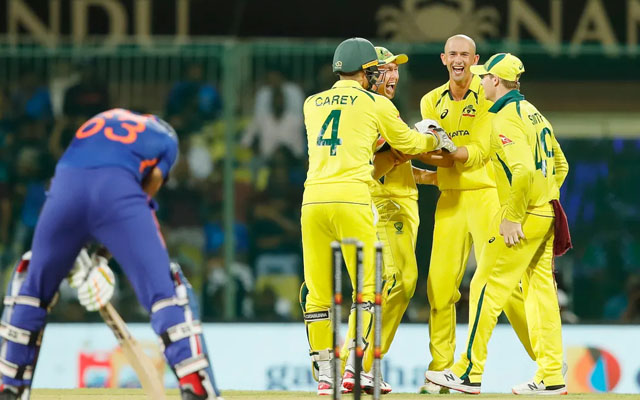
Source Image: Crictracker
These expressions describe different situations, even though all involve a batter failing to score.
A duck is any dismissal for zero. A golden duck is a specific type of duck in which the batter is dismissed on the first ball they face. A pair happens when a batter is dismissed for zero in both innings of the same match.
A king pair is more specific. The batter must be dismissed for zero on the first ball they face in each of the two innings.
For example, suppose a batter scores zero in the first innings after facing three balls and then scores zero in the second innings after facing two balls. This is a pair, but not a king pair, because neither dismissal occurred on the first ball faced.
The term pair is particularly associated with Test cricket and other matches in which each team has two innings.
Why Is Getting Out for a Duck Important in Cricket?
A duck can affect a team’s plans, particularly when an important batter loses their wicket early. Teams rely on their top order to build partnerships, set competitive totals and manage pressure.
In Test cricket, an early duck can expose the middle order while the ball is still relatively new. In ODI cricket, it can force a team to rebuild rather than maintain its planned scoring rate. In T20 cricket, losing a batter for zero can be costly because every wicket and delivery matters in a short innings.
However, one duck does not define a player’s ability. Even experienced international batters sometimes fail to score. Their overall contribution should be judged through performances across matches rather than one dismissal.
Understanding ducks also helps fans read scorecards and compare performances. A zero on the scorecard tells you the batter did not score, while the number of balls faced helps explain whether the dismissal was a golden duck or another type of duck.
Conclusion
A duck out in cricket means a batter is dismissed without scoring a run. A golden duck occurs on the first ball faced, while a diamond duck generally involves a dismissal without facing a legal delivery. A pair means scoring zero in both innings of a match, and a king pair means being dismissed on the first ball faced in both innings.
Royal and platinum ducks are informal terms whose meanings can vary between sources, so explaining the exact dismissal helps avoid confusion. Although getting a duck can be disappointing, it is only one part of a batter’s performance and does not define an entire career.
Frequently Asked Questions
Duck out means a batter is dismissed without scoring any runs in their innings. The scorecard records the batter’s score as zero.
A golden duck occurs when a batter is dismissed for zero on the first ball they face. It can happen in any format of cricket.
A diamond duck generally occurs when a batter is dismissed for zero without facing a legal delivery. A run out at the non-striker’s end before facing a ball is a common example.
No. If a batter finishes an innings on zero without being dismissed, they are recorded as not out. A duck requires the batter to be dismissed while on zero.
A pair means a batter is dismissed for zero in both innings of the same match. A king pair means the batter is dismissed for zero on the first ball they face in each innings.