
What Is a Wide Ball in Cricket? Rules, Runs, and Examples
A single extra delivery can change the momentum of a cricket match. When a bowler sends the ball beyond the batter’s reasonable reach, the umpire may call it a wide ball. This awards the batting team an extra run and requires the bowler to deliver another valid ball to complete the over.
In a close match, even a few wides can make a difference to the final result.
But what is a wide ball in cricket, and how does the umpire decide whether a delivery is wide? Does every ball outside the off stump count as a wide? Can a batter get out on a wide ball? Understanding these rules helps you follow scorecards, enjoy live matches and learn the finer details of cricket.
What Is a Wide Ball in Cricket?
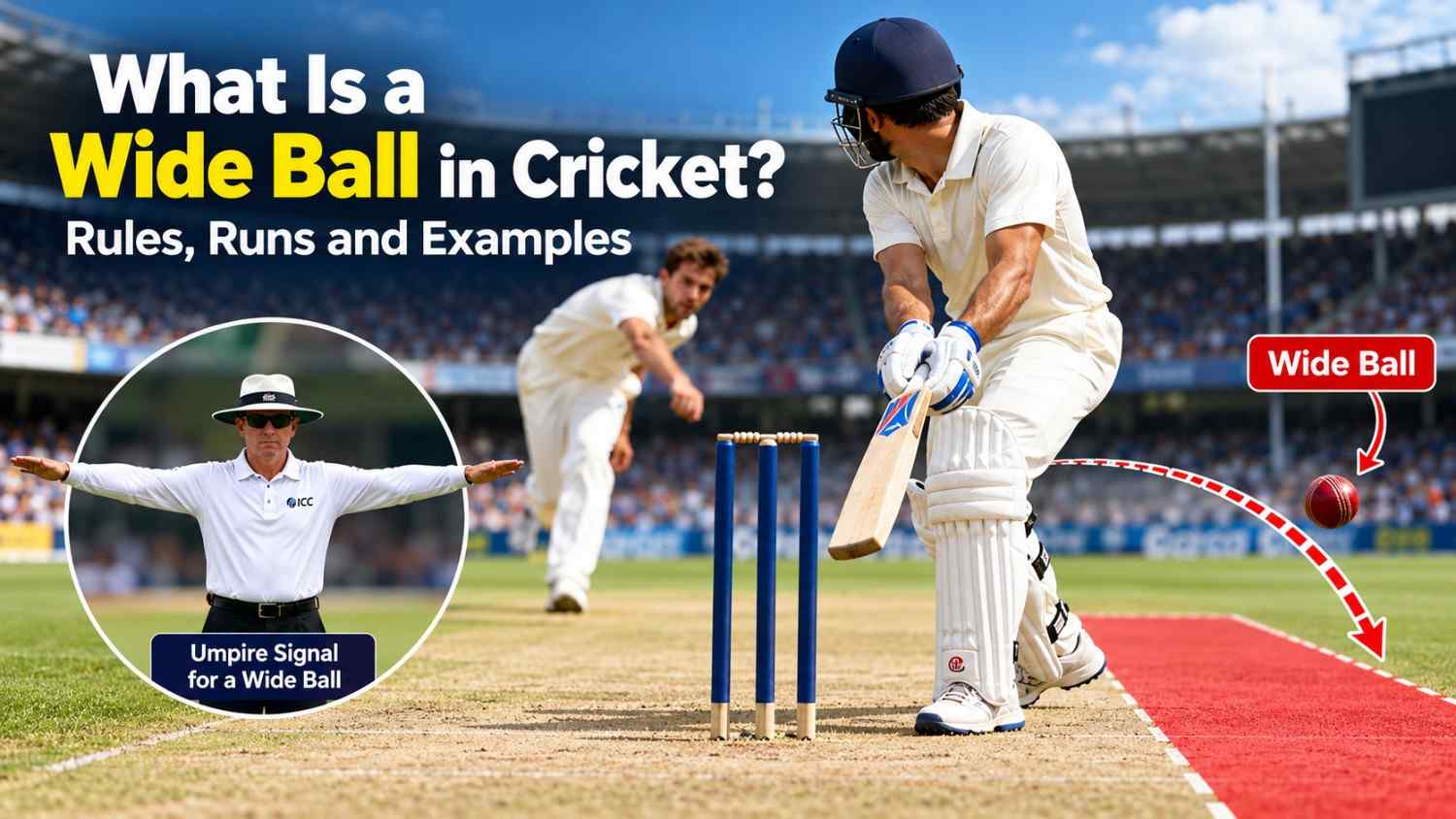
A wide ball in cricket is a delivery that the umpire judges to be beyond the striker’s reasonable reach for a normal cricket stroke. The general rule is covered by Law 22 of the MCC Laws of Cricket, 2017 Code, 4th Edition (2026).
Under the 2026 MCC Laws, the umpire considers whether the ball passes wide of where the striker is standing or has stood during the delivery and whether it would also have passed wide of a striker in a normal batting position. A delivery is considered wide if it is not sufficiently within reach to be played with a normal cricket stroke.
The 2026 Laws also classify a delivery that pitches and then passes, or would have passed, above the head height of a striker standing upright at the popping crease as a wide.
International cricket can have additional playing conditions that modify how wides are judged. The distinction is particularly important in limited-overs matches, where specific guidelines apply to deliveries on the leg side.
A delivery outside the stumps is not automatically a wide. The umpire must assess the ball’s path, the striker’s position and the rules governing the match.
How Many Runs Does a Wide Ball Give in Cricket?
A wide ball awards one penalty run to the batting team. This run is added to the team’s total but is not credited to either batter.
A wide does not count as one of the valid deliveries in the over. The bowler must deliver another valid ball to complete the over.
For example, suppose a bowler delivers five valid balls and then bowls a wide. The batting team receives one extra run, but the over still contains only five valid deliveries. The bowler must deliver another valid ball to complete the six-ball over.
Additional runs can also be scored if the batters run between the wickets or the ball reaches the boundary. These runs are recorded as wides rather than as runs scored by the batter.
These scoring rules are explained in Law 22.6–22.8 of the MCC Laws of Cricket.
Example of Runs From a Wide Ball
| Match situation | Runs added to team total | Runs recorded as wides |
| The umpire calls a wide and the batters do not run | 1 | 1 |
| A wide is called and the batters complete two runs | 3 | 3 |
| A wide delivery reaches the boundary after bouncing inside the field | 5 | 5 |
| A wide delivery crosses the boundary on the full without touching the bat | 5 | 5 |
These examples assume the wide call stands and no additional penalty applies. When a wide reaches the boundary for four, the batting team receives the one-run wide penalty plus four boundary runs.
A wide that crosses the boundary on the full without touching the bat also scores five wides, not seven. Under the boundary-scoring rules, a delivery that has not been struck by the bat cannot earn six boundary runs.
When Is a Ball Called Wide in Cricket?
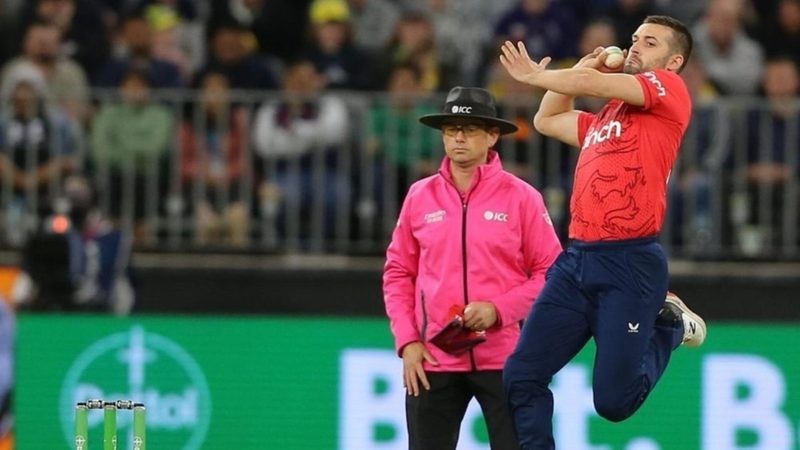
The umpire considers the striker’s position and whether the ball is within reach for a normal cricket stroke. Several situations can lead to a wide call.
1. A Ball Too Far Outside the Off Stump
A delivery that passes too far outside the off stump may be called wide if the batter cannot reasonably reach it with a normal cricket stroke.
For example, a batter takes a normal stance and the bowler delivers the ball far outside the off stump. If the ball is beyond reasonable reach, the umpire may signal a wide.
However, a ball outside the off stump is not always wide. A batter may be able to reach it with a normal shot, so the umpire must judge the delivery in context.
2. A Ball Too Far Down the Leg Side
A delivery that passes too far down the leg side can also be called wide. This can happen when a bowler attempts to bowl towards the batter’s body but misses the intended line.
In international limited-overs cricket, the ICC has introduced a permanent change to the leg-side wide interpretation in its ODI and T20I Playing Conditions, effective for international series starting on or after 1 October 2026.
The rule was initially trialled from October 2025. It uses the position of the batter’s legs at the point of delivery as a reference when judging certain leg-side deliveries, even if the batter subsequently moves across to the off side.
The protected area marker line is extended to the popping crease to guide umpires. Under the relevant provision, a delivery passing between the leg stump and the protected area marker is not called wide. The batter’s movement and the applicable playing conditions remain important to the decision.
The change is intended to give bowlers greater fairness when batters move around before or during a delivery.
3. A Ball Passing Above the Batter’s Head
Under the 2026 MCC Laws, a delivery that pitches and then passes, or would have passed, above the head height of a striker standing upright at the popping crease can be called wide.
This rule concerns a ball that pitches before reaching the striker. A delivery that does not pitch must be judged under the relevant provisions governing high or dangerous deliveries.
International playing conditions may also contain additional provisions, so the precise decision in a Test, ODI or T20I match depends on the rules governing that competition.
When Is a Ball Not Called Wide?
Not every delivery that looks difficult to hit is automatically a wide. The umpire must consider the circumstances and apply the relevant rules.
A delivery may not be called wide if the striker moves and brings the ball sufficiently within reach to play a normal cricket stroke. The umpire also considers where the striker is standing or has stood during the delivery.
The rules distinguish between contact that occurs as the ball passes the striker and contact that happens later.
Under MCC Law 22.3, the umpire must revoke a wide call if the ball subsequently makes contact with the striker’s bat or person before touching a fielder.
Under Law 22.4, a delivery is not wide if it touches the striker’s bat or person as it passes the striker.
These rules balance the batter’s freedom of movement with the bowler’s right to bowl a fair delivery.
Where International Playing Conditions Differ
The MCC Laws provide the general framework for wide-ball decisions, but international cricket may apply additional playing conditions. Two areas are particularly relevant: pitch guidelines and the leg-side wide interpretation.
Wide Guidelines on the Pitch
In limited-overs cricket, viewers often see white lines on either side of the pitch, commonly called wide guidelines or tramlines. These markings help umpires judge deliveries that pass wide of the striker, particularly on the off side.
The guidelines provide a visual reference, but their exact application depends on the competition’s playing conditions and the batter’s position. A ball outside a guideline is not necessarily wide in every situation.
The umpire must apply the relevant playing conditions rather than rely on the markings alone.
The ICC’s Permanent Leg-Side Wide Rule
The ICC’s revised leg-side wide interpretation became permanent in its ODI and T20I Playing Conditions for international series starting on or after 1 October 2026.
The position of the batter’s legs at the point of delivery provides the reference for certain wide-ball decisions. This helps prevent batters from gaining an unfair advantage by moving across the crease after the bowler has committed to the delivery.
The extended protected area marker provides an additional visual guide for umpires. The rule aims to make leg-side wide decisions fairer and more consistent for both batters and bowlers.
These provisions apply under the relevant international playing conditions and should not automatically be assumed to govern every form of domestic or recreational cricket.
What Is the Difference Between a Wide Ball and a No Ball?
A wide ball and a no ball are both illegal deliveries, but they are called for different reasons.
A wide is generally called when a delivery is beyond the striker’s reasonable reach or meets another wide-ball criterion. A no ball can be called for several other reasons, including certain foot faults and illegal deliveries.
| Feature | Wide ball | No ball |
| Main reason | Delivery is too far from the batter or meets another wide criterion | Delivery breaches a no-ball rule |
| Penalty | One run | One run under the standard Laws, subject to applicable playing conditions |
| Counts as a valid ball in the over | No | No |
| Can the call be revoked? | Yes, in specified circumstances | Yes, in specified circumstances |
| Possible dismissals | Run out, stumped, hit wicket and obstructing the field | Run out, obstructing the field and hit the ball twice, subject to the Laws |
A no ball overrides a wide call if both would otherwise apply to the same delivery.
The two rules also differ in the dismissals they permit. Under Law 22.9, a batter cannot be dismissed caught or bowled from a delivery that remains a wide. The specific dismissal rules for a no ball are covered separately under Law 21.
Can a Batter Get Out on a Wide Ball?
Yes, a batter can be dismissed on a wide ball, but only in certain ways.
Under the standard MCC Laws, a batter may be dismissed by:
- Run out: A batter is outside the crease and the fielding side breaks the wicket legally.
- Stumped: The wicketkeeper breaks the wicket while the striker is outside the crease and the requirements for a stumping are met.
- Hit wicket: The striker breaks their own wicket in a way covered by the relevant law.
- Obstructing the field: A batter obstructs the fielding side in circumstances covered by the law.
A batter cannot be dismissed caught or bowled from a delivery that remains a wide. The wide penalty generally stands even if a batter is dismissed, unless the call is revoked under the rules.
These dismissal rules are covered under MCC Law 22.9 and the relevant dismissal laws.
What Is the Umpire’s Signal for a Wide Ball?
The umpire signals a wide by extending both arms horizontally out to the sides.
The signal tells the scorers, players and spectators that the delivery has been judged wide. The umpire calls and signals wide as the ball passes the striker’s wicket.
The ball does not automatically become dead when the umpire calls wide. Batters may still run, and the fielding side can attempt a run out or stumping if the relevant conditions are met.
Does a Wide Ball Count in an Over?
No. A wide does not count as one of the valid balls in an over.
In a standard six-ball over, the bowler must deliver six valid balls. If one of the deliveries is wide, the bowler must bowl an additional delivery to complete the over.
For example, if a bowler delivers four valid balls, bowls one wide and then delivers two more valid balls, the over is complete after the sixth valid ball. The wide adds a run to the batting team’s score but does not count towards the six valid deliveries.
The same basic principle applies to no balls. Both types of delivery require an additional delivery when they do not count towards the over. The wide-ball rule is covered under MCC Law 22.8, while the general rules for overs are explained in Law 17.
Why Are Wide Balls Important in Cricket?
Wide balls can influence both the scoreboard and the match strategy.
For the batting team, a wide provides an extra run without requiring the batter to hit the ball. It can also create a scoring opportunity if the wicketkeeper struggles to collect the delivery or the batters run additional runs.
For the bowling team, wides increase the opposition’s total and require extra deliveries. In limited-overs cricket, this can affect the number of deliveries available to build pressure and defend a target.
Wides also matter in close finishes. When the batting team needs only a few runs, an unnecessary wide can reduce the pressure on the batters and bring the target closer.
Good bowlers therefore focus on controlling their line and length while adapting to the batter’s stance and movement. Accuracy is just as important as pace and variation.
Conclusion
A wide ball is an important cricket rule that rewards the batting team when a bowler delivers a ball outside the batter’s reasonable reach. It adds one penalty run, does not count as a valid ball in the over and can create further scoring opportunities.
The 2026 MCC Laws establish the general principles, while international playing conditions introduce additional provisions, including the permanent ICC leg-side wide interpretation for ODIs and T20Is.
Understanding wide-ball rules makes cricket easier to follow, whether you are watching an international match, playing with friends or learning how to read a scorecard.
Frequently Asked Questions About Wide Balls in Cricket
A wide ball is a delivery that the umpire considers too far from the batter to be reached with a normal cricket stroke under the applicable rules. The batting team receives one penalty run, and the delivery does not count as a valid ball in the over.
One penalty run is awarded automatically. If the batters run additional runs or the ball reaches the boundary, those runs are added to the total and recorded as wides, subject to the applicable rules. A wide that crosses the boundary on the full without touching the bat scores five wides, not seven.
No. A wide is not a valid delivery, so the bowler must bowl another ball to complete a standard six-ball over.
Yes. A batter can be run out, stumped, dismissed hit wicket or dismissed for obstructing the field in the circumstances specified by the Laws. A batter cannot be caught or bowled from a delivery that remains a wide.
No. The umpire considers the striker’s position, whether the ball is within reach for a normal cricket stroke and the applicable playing conditions. A delivery outside the off stump can be legal if the batter can reasonably reach it.