
Most ODI Wickets for India: Top 10 Indian Bowlers
Who has taken the most ODI wickets for India? Anil Kumble holds the record with 334 wickets in 269 matches for India, ahead of legendary fast bowler Javagal Srinath, who claimed 315 wickets. From Kumble’s accuracy and Srinath’s pace to Zaheer Khan’s swing and Mohammed Shami’s wicket-taking ability, India’s greatest bowlers have shaped memorable moments in One Day International cricket.
One of the most significant milestones in India’s ODI bowling history belongs to Kuldeep Yadav. On 30 September 2026, he reached 200 ODI wickets during the second ODI against the West Indies in Guwahati. He achieved the milestone in his 123rd ODI innings, breaking Anil Kumble’s record of 147 matches to become the fastest Indian spinner to reach 200 ODI wickets.
This guide ranks India’s top 10 ODI wicket-takers by wickets taken for India and examines their matches, bowling averages, best bowling figures and major achievements.
Most ODI Wickets for India: Top 10 Bowlers
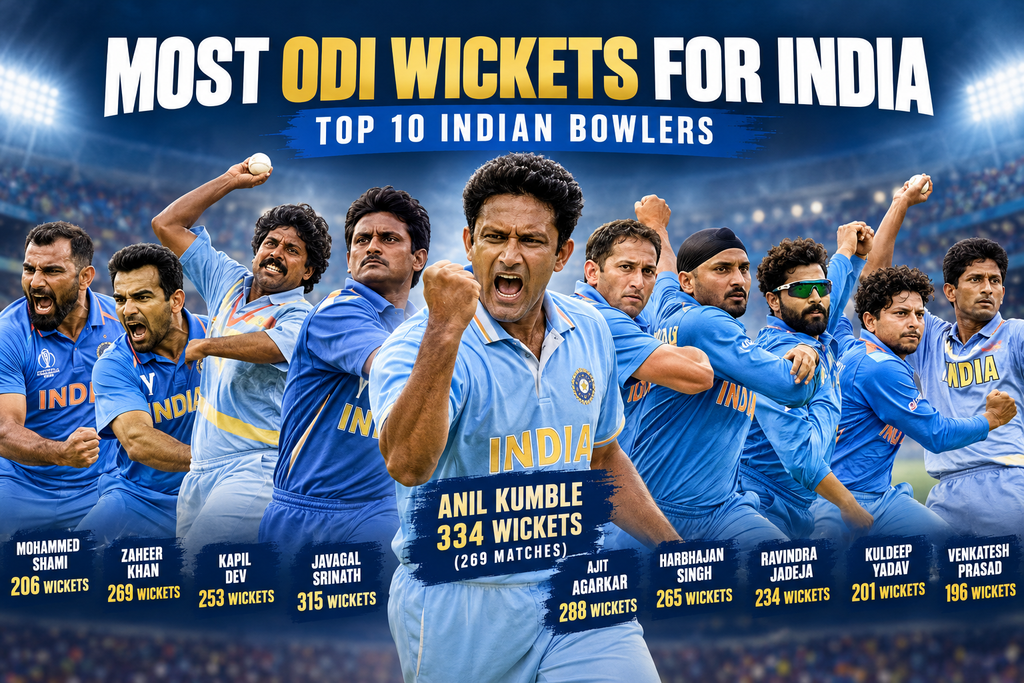
Anil Kumble leads the list with 334 wickets for India, followed by Javagal Srinath with 315 and Ajit Agarkar with 288. Zaheer Khan and Harbhajan Singh complete the top five, while Kapil Dev, Ravindra Jadeja, Mohammed Shami, Kuldeep Yadav and Venkatesh Prasad round out the top 10.
The following compares India’s leading ODI wicket-takers by wickets, matches, bowling average and career span.
| Rank | Player | Matches | Wickets for India | Bowling Average | Career Span |
| 1 | Anil Kumble | 269 | 334 | 30.83 | 1990–2007 |
| 2 | Javagal Srinath | 229 | 315 | 28.08 | 1991–2003 |
| 3 | Ajit Agarkar | 191 | 288 | 27.85 | 1998–2007 |
| 4 | Zaheer Khan | 194 | 269 | 30.11 | 2000–2012 |
| 5 | Harbhajan Singh | 234 | 265 | 33.47 | 1998–2015 |
| 6 | Kapil Dev | 225 | 253 | 27.45 | 1978–1994 |
| 7 | Ravindra Jadeja | 212 | 234 | 36.78 | 2009–2026 |
| 8 | Mohammed Shami | 108 | 206 | 24.05 | 2013–2025 |
| 9 | Kuldeep Yadav | 124 | 201 | 26.93 | 2017–2026 |
| 10 | Venkatesh Prasad | 161 | 196 | 32.30 | 1994–2001 |
Statistics note: Figures are as of 26 October 2026 and refer to wickets taken for India in ODIs. Anil Kumble (337), Zaheer Khan (282) and Harbhajan Singh (269) have higher career totals when all ODI appearances, including matches for Asia XI, are included. Ravindra Jadeja, Mohammed Shami and Kuldeep Yadav are active players, so their totals may change.
1. Anil Kumble: India’s Leading ODI Wicket-Taker
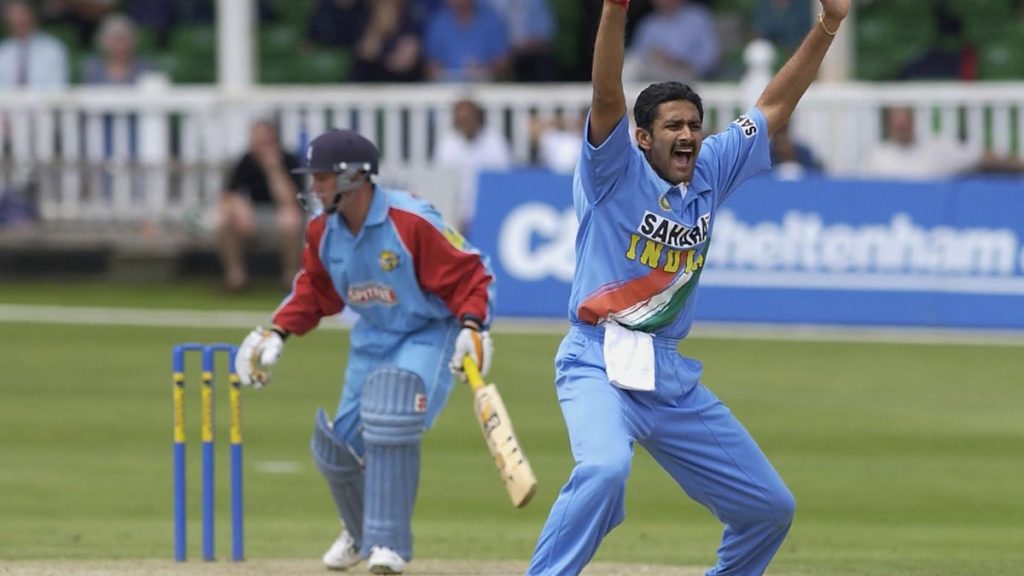
Anil Kumble is India’s most successful bowler by ODI career wicket total. He claimed 334 wickets in 269 matches between 1990 and 2007, establishing a record that has stood across generations of Indian cricket.
Kumble relied on accuracy, bounce and changes in pace to trouble batters. Rather than depending entirely on extravagant turn, he built pressure through disciplined bowling and forced batters into mistakes. His ability to bowl long spells made him effective against different opponents and in varied playing conditions.
His best ODI bowling figures were 6 for 12. He recorded two five-wicket hauls and eight four-wicket hauls in the format. These performances demonstrate his ability to turn matches through sustained pressure and important breakthroughs.
Kumble also enjoyed an outstanding Test career, finishing with 619 wickets. His achievements across formats underline his importance to Indian cricket. In ODIs, his combination of consistency, endurance and wicket-taking ability keeps him at the top of India’s all-time list.
2. Javagal Srinath: India’s Leading Fast Bowler of His Era
Javagal Srinath finished his ODI career with 315 wickets in 229 matches. He represented India from 1991 to 2003 and was one of the country’s most important fast bowlers during that period.
Srinath brought pace, bounce and seam movement to the attack. At a time when India relied heavily on spin bowling, he provided a reliable fast-bowling option capable of challenging international batters with the new ball and breaking established partnerships.
His best ODI bowling figures were 5 for 23. He recorded three five-wicket hauls and seven four-wicket hauls, highlighting his ability to deliver match-changing spells.
Srinath’s record places him second on India’s all-time ODI wicket list. His career also established an important benchmark for Indian fast bowlers and helped strengthen India’s pace attack in international cricket.
3. Ajit Agarkar: A Consistent Wicket-Taker
Ajit Agarkar claimed 288 ODI wickets in 191 matches between 1998 and 2007. His bowling average of 27.85 highlights his ability to take wickets at a relatively low cost.
Agarkar combined pace with movement and could contribute during the early overs as well as later in an innings. His variations helped him challenge batters, while his lower-order batting provided India with another useful option.
His best ODI bowling figures were 6 for 42. He recorded two five-wicket hauls and ten four-wicket hauls, demonstrating his knack for producing productive spells without necessarily needing a five-wicket performance.
Agarkar’s record demonstrates why bowling average is useful alongside career wickets when comparing players. Although his international career was shorter than Kumble’s or Srinath’s, his wicket tally places him among India’s most successful ODI bowlers.
4. Zaheer Khan: A Key Bowler in Major Tournaments
Zaheer Khan took 269 ODI wickets in 194 matches from 2000 to 2012. He became one of India’s leading left-arm fast bowlers and played a major role in several international tournaments.
Zaheer used swing, changes of pace and accurate yorkers to challenge batters. He could take early wickets with the new ball and return later to bowl under pressure. His ability to vary his approach made him a valuable option in different match situations.
His best ODI bowling figures were 5 for 42. He recorded one five-wicket haul and seven four-wicket hauls. He also played a significant role in India’s successful 2011 Cricket World Cup campaign, using his experience and control to support the team’s bowling attack.
Zaheer’s career places him among India’s most successful fast bowlers in ODI history. His left-arm angle and tactical intelligence gave India an important alternative to right-arm pace bowling.
5. Harbhajan Singh: A Major Contributor with Spin
Harbhajan Singh finished his ODI career with 265 wickets in 234 matches for India. He represented India in the format from 1998 to 2015 and became one of the country’s best-known off-spinners.
Harbhajan used flight, turn and changes in pace to create pressure. He was effective in the middle overs, where controlling the scoring rate and breaking partnerships are important. His attacking approach also allowed him to challenge batters who attempted to dominate spin bowling.
Harbhajan’s best ODI bowling figures were 5 for 31. He claimed three five-wicket hauls and two four-wicket hauls. These performances reflect his ability to take several wickets in an innings and influence the outcome of a match.
His record highlights the important role spin bowling played in India’s international teams during his career. Alongside Kumble, Harbhajan formed part of a generation that gave India considerable strength in the spin department.
6. Kapil Dev: India’s Legendary All-Rounder
Kapil Dev took 253 ODI wickets in 225 matches between 1978 and 1994. He captained India to its first men’s Cricket World Cup title in 1983, becoming one of the most influential figures in the country’s cricket history.
Kapil combined fast-medium bowling with valuable batting contributions. He could move the ball, maintain a disciplined line and take wickets at important moments. His versatility allowed India to balance its team without sacrificing either batting depth or bowling strength.
His ODI bowling average was 27.45, while his economy rate was 3.71 runs per over. His best bowling figures were 5 for 43. He recorded one five-wicket haul and three four-wicket hauls.
Kapil’s achievements with bat and ball make him one of India’s greatest all-rounders. His influence extended beyond individual statistics, as he helped change international perceptions of India’s ability to compete with the world’s strongest cricket teams.
7. Ravindra Jadeja: A Successful Left-Arm Spinner
Ravindra Jadeja has taken 234 ODI wickets for India in 212 matches as of 26 October 2026. His international ODI career began in 2009, and he has developed into a valuable all-rounder for India.
Jadeja is known for accurate left-arm spin, exceptional fielding and useful batting. His control helps captains restrict scoring in the middle overs while creating opportunities for wickets. He can also contribute with the bat, giving the team additional flexibility when building a balanced playing XI.
His best ODI bowling figures are 5 for 33. Jadeja has recorded two five-wicket hauls and seven four-wicket hauls, demonstrating his ability to combine control with important breakthroughs.
Jadeja’s position on the all-time list reflects the value of consistent performances across different phases of an ODI innings. His contribution with the bat and in the field also makes him an important part of India’s limited-overs setup.
8. Mohammed Shami: An Effective Fast Bowler
Mohammed Shami has taken 206 ODI wickets in 108 matches for India. His bowling average of 24.05 is the lowest among the ten bowlers listed, illustrating his effectiveness at taking wickets relative to the runs conceded.
Shami combines pace with seam movement and accuracy. He is particularly dangerous when he finds movement off the pitch and challenges batters with deliveries directed at the stumps. His ability to generate movement at high pace makes him a significant threat in the early overs.
His best ODI bowling figures are 7 for 57. His record includes six five-wicket hauls and ten four-wicket hauls, underlining his ability to produce outstanding spells. He also played a crucial role in India’s campaign at the 2023 men’s Cricket World Cup, finishing as the tournament’s leading wicket-taker.
Shami’s record shows why bowling average and strike rate matter alongside total wickets. His ability to take wickets at important moments has made him one of India’s most effective ODI fast bowlers. His career span in the table runs from his 2013 debut through his most recent ODI in 2025.
9. Kuldeep Yadav: The Indian Spinner Who Broke Kumble’s Record
Kuldeep Yadav reached 200 ODI wickets on 30 September 2026, during the second ODI against the West Indies in Guwahati. He took 2 for 65 in ten overs, dismissing Shai Hope and Keemo Paul. He reached the milestone in his 123rd ODI innings, breaking Anil Kumble’s record of 147 matches to become the fastest Indian spinner to reach 200 ODI wickets.
The achievement was particularly significant because Kumble’s record had stood for 28 years. Kuldeep became the fourth Indian spinner to reach 200 ODI wickets, joining Kumble, Harbhajan Singh and Ravindra Jadeja. He was also the ninth Indian bowler to reach the 200-wicket milestone. Mohammed Shami remains the fastest Indian bowler overall to reach 200 ODI wickets, having achieved the milestone in 104 matches.
Kuldeep is a left-arm wrist spinner who uses changes in flight, turn and pace to deceive batters. His variations make him a valuable option in the middle overs, when teams need breakthroughs to prevent partnerships from growing. His ability to turn the ball in both directions also makes it difficult for batters to predict his deliveries.
At the 200-wicket milestone on 30 September, Kuldeep had a bowling average of 26.76. His best ODI bowling figures were 6 for 25, and he had recorded ten four-wicket hauls and two five-wicket hauls. Following India’s third ODI against the West Indies on 3 October 2026, his career total stood at 201 wickets in 124 matches, with a bowling average of 26.93.
Kuldeep’s achievement adds an important chapter to India’s ODI bowling history. By breaking Kumble’s record for Indian spinners, he demonstrated how a modern wrist-spinner can become a consistent wicket-taking force in international cricket.
10. Venkatesh Prasad: A Reliable Fast Bowler
Venkatesh Prasad took 196 ODI wickets in 161 matches between 1994 and 2001. He was a dependable fast bowler during an important period for Indian cricket.
Prasad used seam movement and disciplined line and length to challenge opposition batters. Rather than relying solely on pace, he focused on accuracy and consistency, helping India compete against strong batting line-ups throughout the 1990s.
His best ODI bowling figures were 5 for 27. He recorded one five-wicket haul and three four-wicket hauls, demonstrating his ability to deliver productive spells and take multiple wickets in an innings.
Prasad’s record earns him a place among India’s ten leading ODI wicket-takers. Although he finished just short of the 200-wicket milestone, his contribution to India’s bowling attack remains an important part of the country’s ODI history.
What Do ODI Bowling Statistics Tell Us?
Career wickets provide a useful measure of a bowler’s achievements, but other statistics help explain how effectively that bowler performed.
- Bowling average: The number of runs conceded per wicket. A lower average generally means a bowler takes wickets at a lower cost.
- Economy rate: The number of runs conceded per over. A lower rate indicates better control over scoring.
- Bowling strike rate: The number of deliveries bowled per wicket. A lower strike rate means a bowler takes wickets more frequently.
- Four-wicket and five-wicket hauls: These record how often a bowler takes four or five wickets in an innings, respectively.
For example, Kumble leads India in career ODI wickets, while Shami’s bowling average of 24.05 is lower than those of the other players in this top-ten list. This indicates that Shami has conceded fewer runs per wicket, although the two bowlers played in different eras and under different conditions.
These figures should also be considered alongside a player’s role, career length, playing conditions and opportunities. A bowler who regularly controls the scoring rate can make a valuable contribution even when they do not take multiple wickets in an innings.
Why Does Anil Kumble Hold India’s ODI Wicket Record?
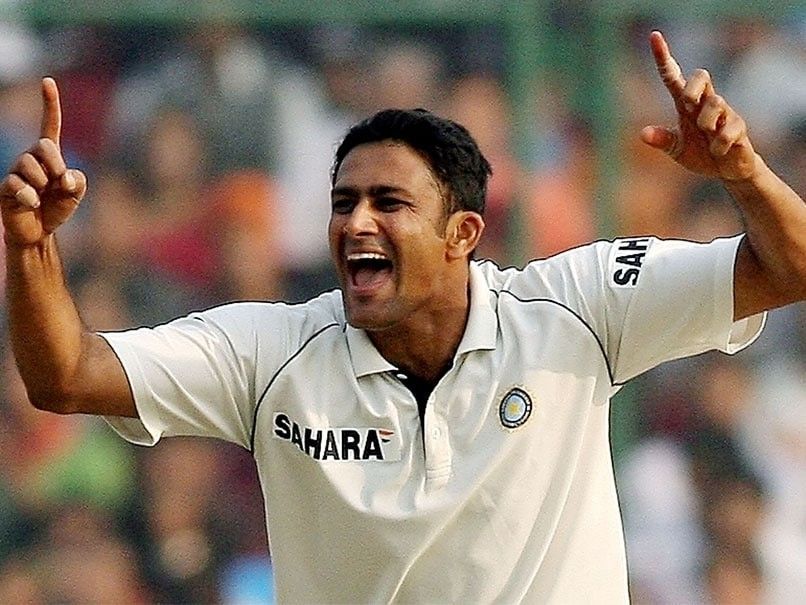
Image Source: NDTV Sports
Kumble’s record reflects longevity, consistency and a large number of appearances. He played 269 ODIs and bowled in 263 innings, giving him many opportunities to take wickets. His total of 334 wickets for India remains ahead of Srinath’s 315.
His accuracy helped him build pressure, while his ability to extract bounce made him dangerous even on surfaces that offered limited turn. He adapted his approach to different opponents and playing conditions, establishing himself as one of India’s most dependable bowlers.
The difference between Kumble’s 334 wickets and Srinath’s 315 is 19 wickets. Both enjoyed long careers, but Kumble remains India’s leading ODI wicket-taker. His record also provides an important benchmark for modern bowlers, including Kuldeep Yadav, who broke Kumble’s record for the fastest Indian spinner to reach 200 ODI wickets.
Conclusion
Anil Kumble remains India’s leading ODI wicket-taker with 334 wickets, followed by Javagal Srinath and Ajit Agarkar. Zaheer Khan, Harbhajan Singh and Kapil Dev also feature among the country’s most successful bowlers, while Mohammed Shami, Ravindra Jadeja and Kuldeep Yadav represent more recent generations of Indian bowling talent.
Kuldeep’s achievement on 30 September 2026 adds a compelling milestone to this history. By reaching 200 ODI wickets faster than any Indian spinner before him, he broke a record Kumble had held for 28 years. His progress illustrates how India’s bowling legacy continues to evolve.
The list of most ODI wickets for India celebrates different bowling styles, generations and approaches to the game. Comparing career wickets with bowling average, economy rate and strike rate gives readers a clearer understanding of each player’s contribution to Indian cricket.
Frequently Asked Questions
Anil Kumble holds the record with 334 ODI wickets in 269 matches for India. He represented the country in ODI cricket from 1990 to 2007.
Javagal Srinath ranks second with 315 wickets in 229 ODI matches. He played international cricket for India from 1991 to 2003.
Mohammed Shami has the lowest bowling average among the ten bowlers listed, at 24.05 runs per wicket. His best ODI bowling figures are 7 for 57, and he has recorded six five-wicket hauls.
Kapil Dev took 253 ODI wickets in 225 matches. He represented India from 1978 to 1994 and captained the country to the 1983 men’s Cricket World Cup title.
Kuldeep Yadav reached 200 ODI wickets on 30 September 2026, becoming the fourth Indian spinner to achieve the milestone. He reached the landmark in his 123rd ODI innings, breaking Anil Kumble’s record of 147 matches for an Indian spinner to reach 200 wickets. Mohammed Shami remains the fastest Indian bowler overall to reach the milestone, having achieved it in 104 matches.